
In short: How to catch network problems early, before your employees do.
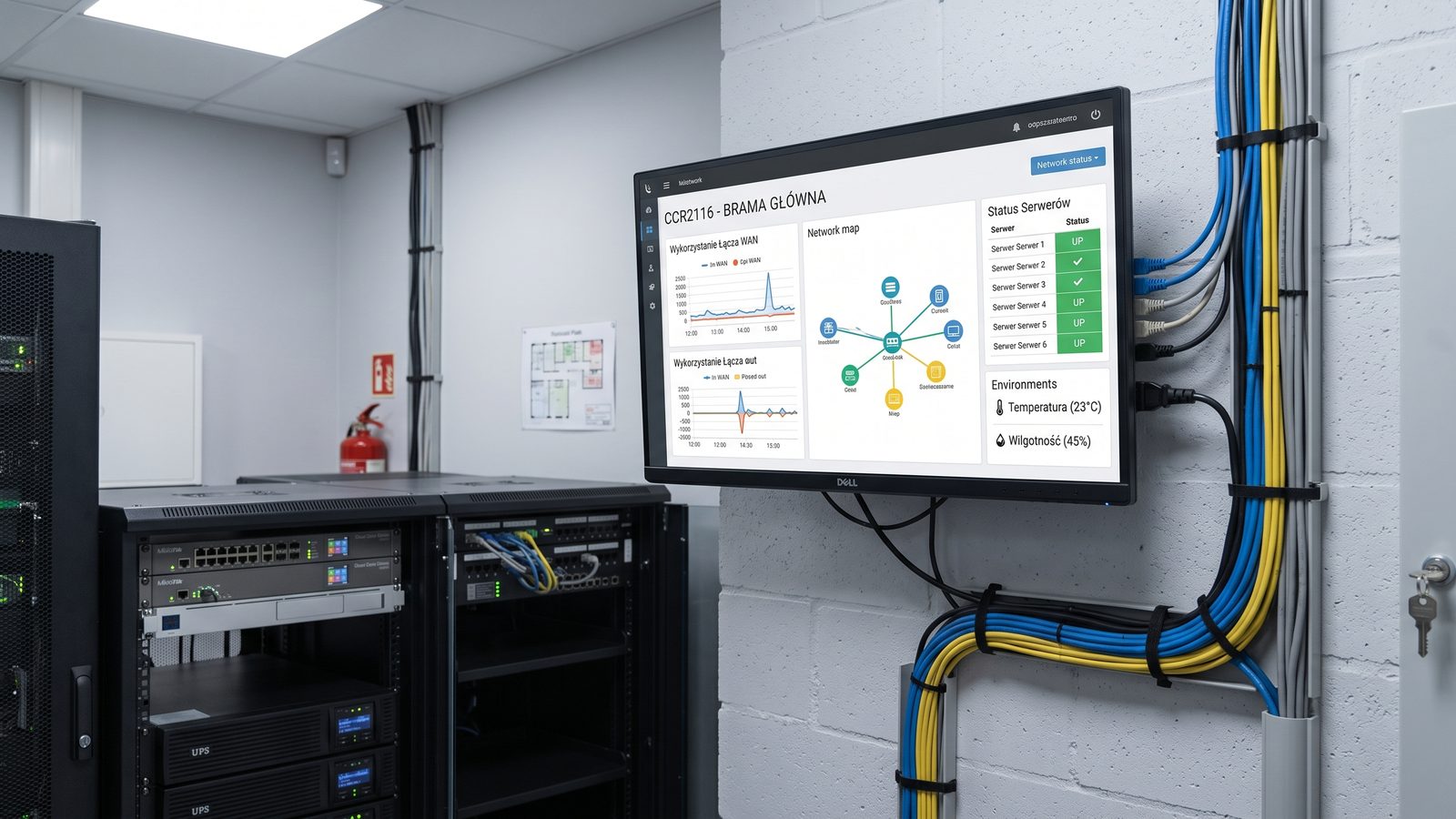
In many companies, the administrator only finds out about a network problem once an irritated employee reports it. Yet most outages are preceded by earlier warning signs — rising link utilization, a device dropping packets, an access point running at the edge of its capacity. Here's how network monitoring helps catch those signals before they turn into a real problem.
Why Proactive Network Monitoring Is Worth It
A reactive approach to network management — waiting for a problem to be reported — means the company always finds out about an outage last, after it has already affected the team's work. Proactive monitoring lets you spot worrying trends early: gradually rising latency, a network device approaching the limit of its resources, or an unusual spike in traffic that might indicate an infected computer on the network.
What's Worth Monitoring
- Device uptime — regularly checking that key switches, routers, and access points are responding on the network, with an automatic alert if something goes down.
- Bandwidth utilization — identifying peak hours and devices generating unusually heavy traffic, useful both for planning expansion and for spotting misuse.
- Access point status and load — number of connected clients, interference levels, and utilization of individual radio channels.
- Security events — login attempts, unusual MAC addresses on the network, or traffic directed toward suspicious IP addresses.
Good Management Practices
Effective network management isn't just about tools — it's also about organizational discipline. It's worth maintaining up-to-date network documentation — a topology diagram, an IP addressing list, an inventory of devices along with their locations — so that in the event of an outage or an administrator's departure, someone else can quickly get their bearings. Equally important is putting a controlled process in place for network device firmware updates, along with change-management rules — an ill-considered switch configuration change made in the middle of the workday is a more common cause of downtime than actual hardware failure.
Rule of thumb: if a company finds out about a network problem from an employee rather than from a monitoring system, that means the monitoring isn't doing its job.
Summary
Monitoring a company network doesn't have to mean an elaborate, expensive system — even basic tools for tracking device availability and network load significantly shorten the time it takes to respond to problems. Combined with organized documentation and a well-thought-out change process, a proactive approach to network management genuinely reduces the number and scale of outages employees experience.
Read also: Zabbix