
In short: Structural requirements, power supply, and ventilation — what to keep in mind before installing a video wall.
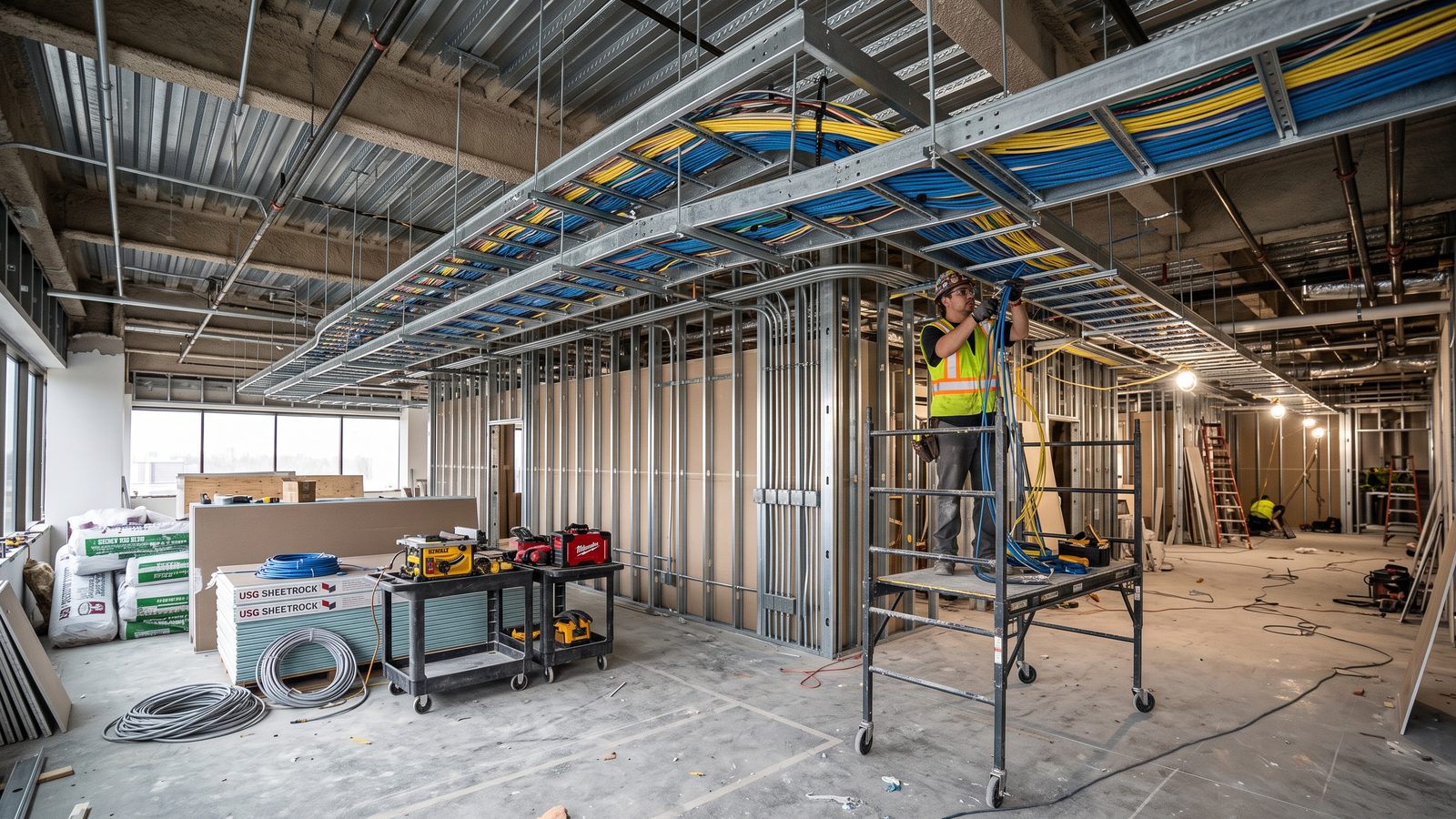
A video wall is one of the more demanding AV installations — not because mounting the panels themselves is complicated, but because the room needs to be properly prepared before the equipment even arrives on site. Shortcuts taken at the preparation stage — in the structure, power supply, or ventilation — only reveal themselves after commissioning, when fixes are much harder and more expensive. Here are the key considerations worth thinking through in advance.
Wall Structure and Load-Bearing Capacity
Video wall panels, especially in larger configurations, can weigh considerably more than a standard TV covering the same area. The wall the system is mounted to needs adequate load-bearing capacity — for lightweight partition walls, a dedicated support frame independent of the wall itself, anchored into the building's structural elements, is often necessary. This needs to be settled with the installer and, if necessary, with a structural engineer, before the equipment is ordered, not after it's delivered.
Electrical Power Supply
Every panel needs its own power, and the video wall as a whole needs a dedicated electrical circuit with appropriate protection, separated from the general-purpose wiring in the room. It's worth planning the number and placement of outlets to match the panel layout exactly, and providing service access to the cabling in case a single panel needs replacing in the future. The electrical installation for this kind of equipment should be done in compliance with applicable regulations and, in commercial buildings, coordinated with the building's electrical designer.
Ventilation and Room Temperature
Video wall panels generate heat, and operating close together in a single plane, they can significantly raise the temperature in their immediate surroundings, especially when built into a niche or wall recess. The room needs to provide adequate air circulation around the structure — whether through natural airflow or forced ventilation — so the equipment's operating temperature stays within the manufacturer's recommended range. Neglecting this shortens the electronics' lifespan and increases the risk of failure.
- Service access from the back or side — makes it easier to replace a single panel without dismantling the whole structure.
- Space for signal and control cabling — it's worth planning cable channels with headroom for future expansion.
- Flooring under the support structure — for freestanding structures, the floor needs to withstand the additional point load.
Rule of thumb: start preparing a room for a video wall by consulting an installer before choosing a specific panel model — equipment parameters drive the requirements for structure, power, and ventilation.
Signal and Control Cabling
Beyond power, a video wall needs signal cabling (usually network cabling or dedicated video cables) and, in many installations, a control bus connecting the video processor to each panel. It's worth planning the route for these cables alongside the power supply, keeping low-voltage cabling appropriately separated from electrical wiring to limit the risk of signal interference.
Summary
A successful video wall installation starts long before the first panel goes up — with checking the wall's load capacity, planning a dedicated power supply, and ensuring adequate ventilation. Skipping any of these considerations at the room-preparation stage usually means costly fixes after the fact.
Read also: Planar