
In short: Height, tilt angle, and mount selection — a complete guide to mounting a TV in the bedroom.
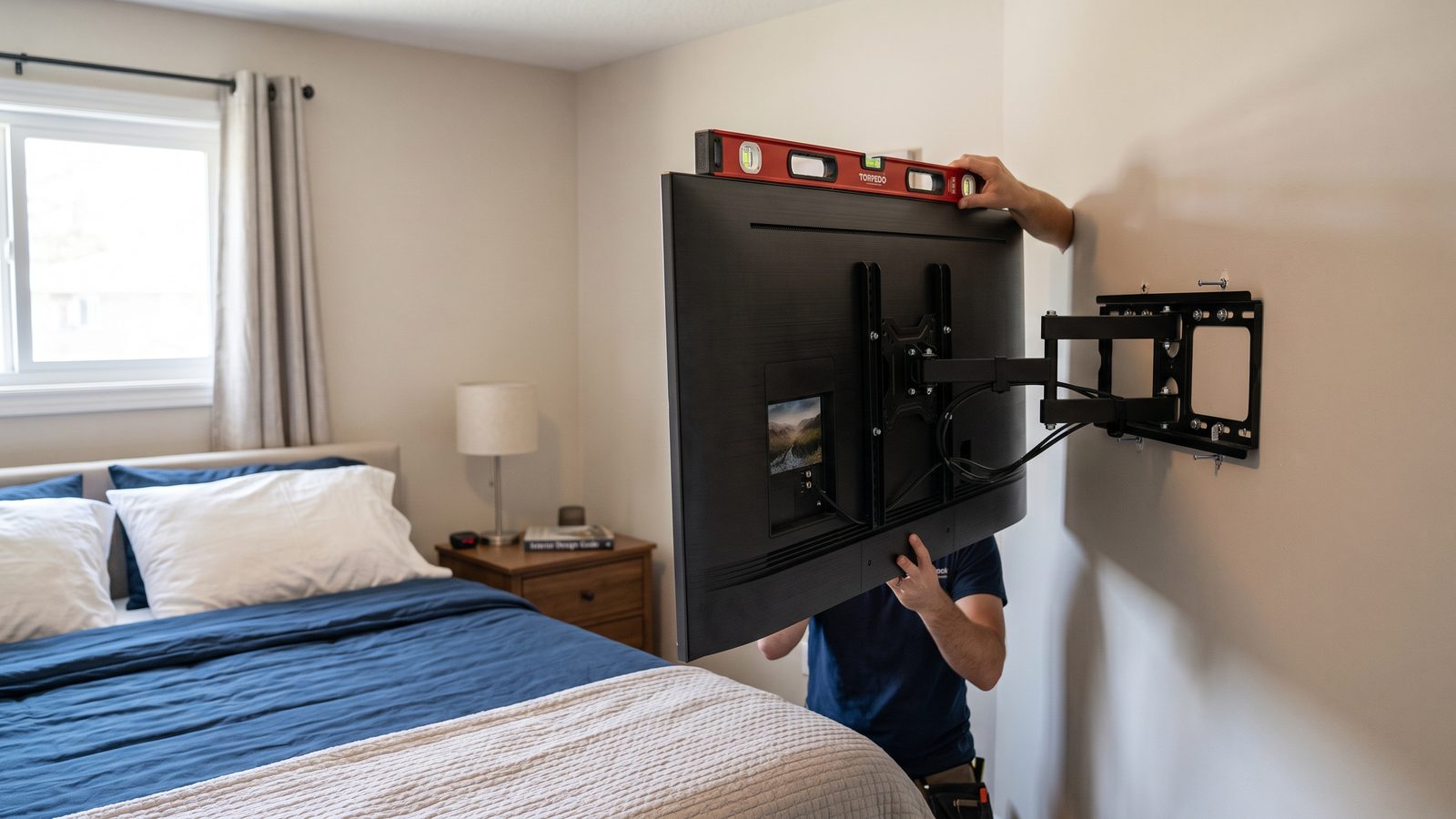
A bedroom plays by different rules than a living room — the TV is watched mostly while lying down, often from a greater distance and at a different angle than from a sofa. Getting the height or tilt angle of the mount wrong translates, in practice, into a stiff neck and glare on the screen instead of a relaxing evening. Here's how to plan the installation so the TV in your bedroom is actually pleasant to watch, not just nice to look at.
What Height to Mount a TV Above the Bed
The reference point isn't standing eye level, but the eye level of someone lying in bed, propped up against pillows. That's usually significantly lower than the "standard" mounting height intuition might suggest from a living room. Before drilling, it's worth sitting on the bed in a typical viewing position and having someone hold the TV (or a similarly sized cardboard box) at a few different heights — a difference of just a few centimeters makes a huge difference to neck comfort after a longer viewing session.
- Large bed, TV facing the headboard — the center of the screen should land roughly at the eye level of someone sitting propped up against pillows.
- TV in a corner of the room or on a dresser — you also need to account for the sideways viewing angle, not just the height.
- Bedroom with high ceilings — it's easy to be tempted to hang the TV "nicely centered on the wall," which often means mounting it too high relative to the actual viewing position.
Tilt Angle and Choosing a Mount
Since a bedroom TV is often mounted higher than eye level while the viewer looks up at an angle from a lying position, a tilting mount tends to work well, letting you angle the screen down by a few to a dozen or so degrees. This reduces glare from ceiling lighting and improves the viewing angle without having to change the mounting height. In smaller bedrooms, where the TV is watched from different spots in the room (for instance when shifting position in bed), a full-motion mount with side rotation is worth considering.
Choosing the Wall and Mounting Method
Before deciding where to mount, check what the wall is made of — masonry walls call for different anchors and mounting methods than drywall on a stud frame. The mount needs to hit a solid anchor point (masonry, or a structural stud), and its weight rating should have some margin above the TV's actual weight — don't rely purely on the manufacturer's stated maximum "right at the limit." If the bedroom is in a multi-unit building and a larger TV on a heavier articulating arm mount is planned, it's also worth confirming that the wall isn't a structural element requiring additional approvals under local building regulations or the building's bylaws.
Rule of thumb: it's better to hang a bedroom TV "too low" than "too high" — from a lying position, it's easier to glance slightly downward than to hold your head up throughout an entire movie.
Glare, Cables, and Finishing Touches
Bedrooms often have windows facing the bed or nightstand lamps on both sides — it's worth checking at different times of day whether the planned mounting spot creates glare on the screen. Power and signal cables are best run through a cable-concealment channel or an in-wall conduit, so they don't hang down the wall above the bed — a matter of both aesthetics and safety, especially in a bedroom shared with children.
Summary
A good bedroom TV installation is above all about matching the height and angle to a lying viewing position, not to living-room standards. Choosing the right mount, checking the wall type, and thoughtfully concealing the cables turn the TV into a comfortable part of the room instead of a daily source of discomfort.
Read also: SANUS