
In short: Proven methods for routing AV cabling that keep an installation looking neat.
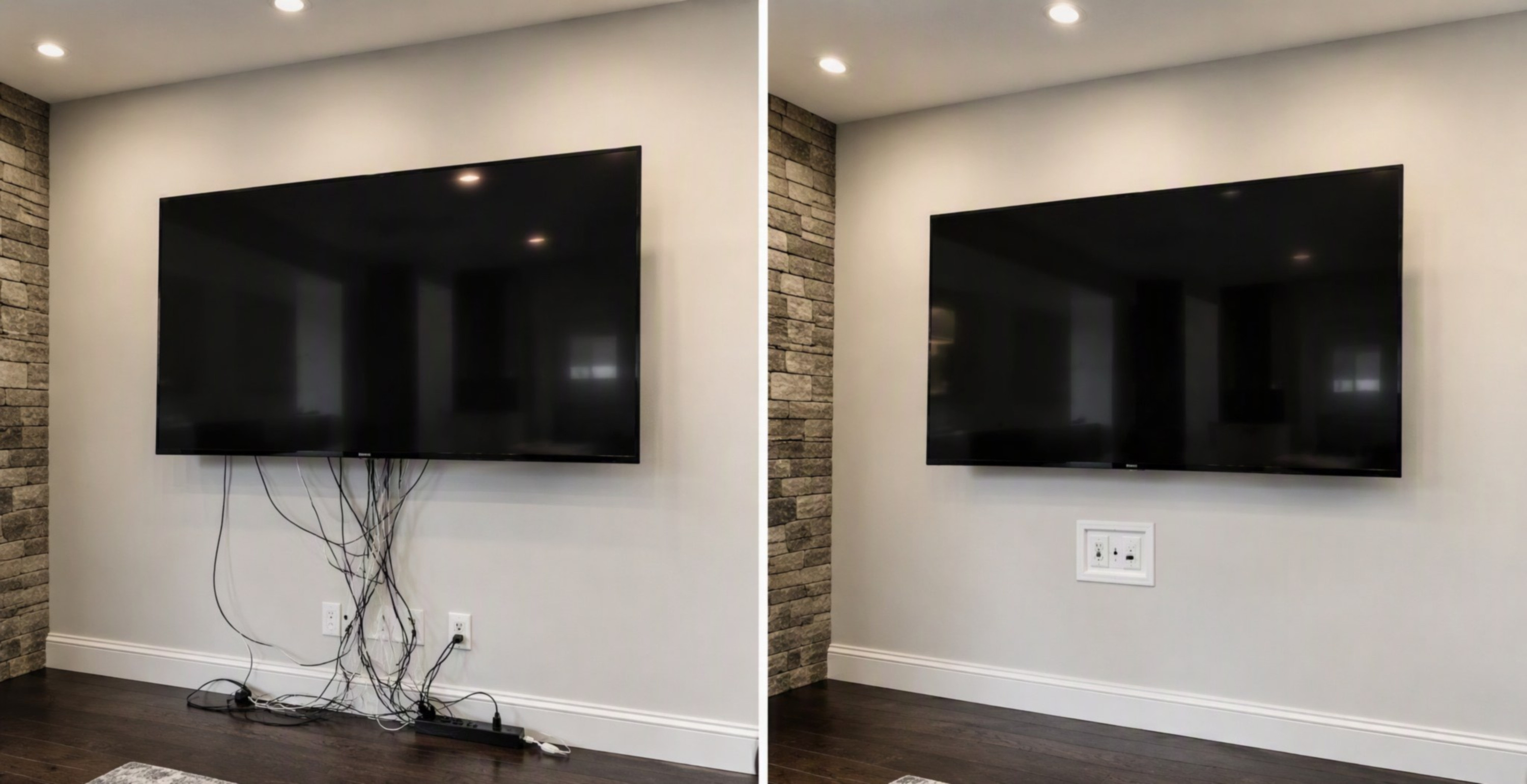
Even the best-chosen audio-visual equipment loses its impact if a tangle of power and signal cables hangs down from under the TV. Concealing the cabling is often the last thing anyone thinks about during an installation — a shame, since planning it from the start avoids the mess without much extra effort. Below are proven ways to route AV cabling, from the simplest to solutions that require working inside the wall.
Cable Channels and Cover Strips
The simplest, least invasive solution — a cover strip or cable channel mounted on the wall surface, painted to match the wall or finished with a texture that mimics it. It works well anywhere you don't want or can't alter the wall's structure, for instance in a rented apartment. Good-quality channels can be practically invisible from a few meters away, especially when run vertically, close to the edge of the wall or behind a piece of furniture.
In-Wall Installation
The most visually polished solution — cables are run through conduit sleeves inside the wall, between the TV and the power outlet or an AV box positioned lower down. This does require working inside the wall, so it's worth first confirming whether the wall is load-bearing and, in multi-unit buildings, whether the planned work needs approval from the building manager or homeowners' association under local building regulations. It's also good practice to plan an extra empty conduit sleeve "for later," which can be used in the future to pull a new cable through without cutting into the wall again.
- AV outlet behind the TV — lets you hide the power strip and signal router directly behind the screen, instead of running a cable to a floor outlet across the room.
- In-wall mounting box — lets you fit power and HDMI outlets inside a wall recess, right behind the TV.
- Floor cable covers — flat, low-profile strips that protect cables running horizontally along the floor from damage and tripping hazards.
Concealing Cables in Furniture and Cabinetry
Where a TV sits on a dresser or in a piece of cabinetry, a good solution is to route the cables through openings in the back panel of the furniture and use cable organizers to bundle the wires into one tidy group. This is a cheap, reversible solution — it requires no changes to the wall while effectively eliminating the sight of tangled cables from the side or back of the furniture.
Rule of thumb: it's easier to plan the cable route before mounting the TV than after — decide on the power point and signal source locations while planning the furniture layout, not as an afterthought.
Cables and Installation Safety
Aesthetics isn't the only reason to tidy up cabling — loose, dangling cables also pose a tripping and damage risk, especially in homes with children or pets. When installing cables in-wall, it's also important to maintain an adequate separation between low-voltage (signal) cabling and 230V electrical wiring, which limits the risk of interference and follows good installation practice.
Summary
Concealing AV cables neatly is a matter of picking the right method for the specific situation — from simple cover strips, through in-wall installation, to organizers built into cabinetry. The best results come from planning the cable route together with the equipment layout, before the first hole is even drilled into the wall.
Read also: SANUS