
In short: A simple methodology for estimating the number of access points based on floor area and headcount.
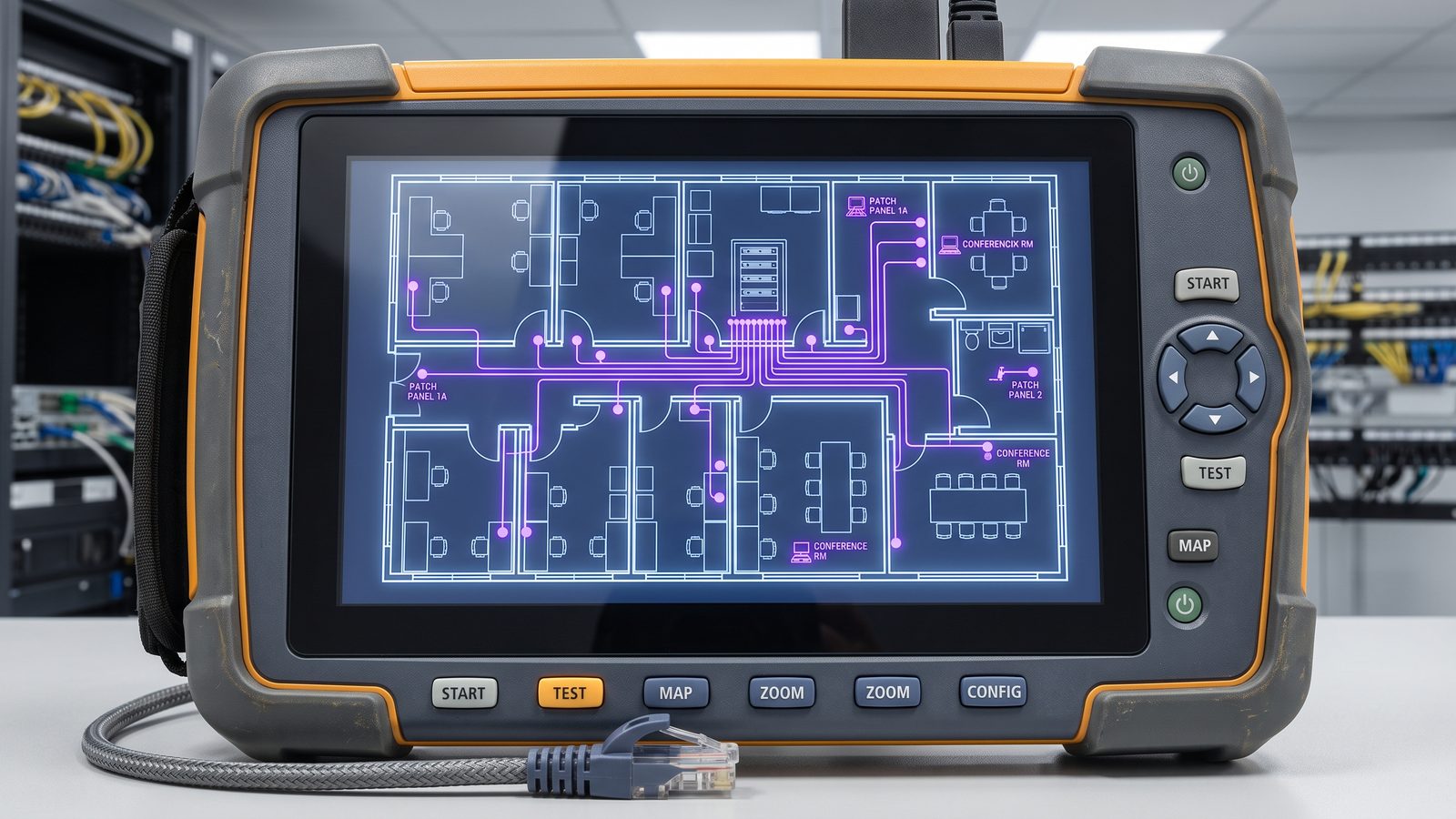
One of the most common questions when planning a wireless network for an office is how many access points are actually needed. The answer "more is always better" can be just as wrong as installing a single access point for an entire building. Here's a simple methodology for estimating the number of APs before you even buy the hardware.
Two Approaches: Coverage and Capacity
Wi-Fi network planning rests on two different criteria that are easy to confuse. Coverage answers the question of whether the signal reaches every spot in the office at all — here, range and obstacles in the path of the radio waves matter most. Capacity answers the question of whether a given access point can handle the number of simultaneously connected devices without a drop in performance. In practice, conference rooms, open-plan offices, and coworking spaces run into capacity problems far more often than pure coverage problems — the signal is there, but quality plummets once a large number of connections pile up at once.
A Simple Way to Estimate
For an initial estimate, it's worth weighing several factors together:
- Floor area and room layout — a single, well-placed access point usually covers one open office zone; thick walls, reinforced concrete, or metal structural elements call for additional access points even over a modest floor area.
- Number of users and their devices — each employee typically connects more than one device to the network (laptop, phone, sometimes a watch or tablet), which needs to be factored into estimating the load on a single AP.
- Nature of the network traffic — an office dominated by video conferencing and large file transfers needs more capacity headroom than one that mostly uses email and a browser.
For a typical open office, a general rule of thumb is to plan access points so that none of them ends up serving too large a group of active users at once — in densely packed rooms, it's better to deploy more, weaker, more closely spaced access points than a few very powerful ones.
When It's Worth Commissioning a Professional Audit
Self-estimation works well for simple, single-story offices with a regular layout. In larger or unusual spaces — with mezzanines, lots of glass, reinforced-concrete walls, or oddly shaped rooms — it's worth having a professional site survey done. Measuring actual signal propagation on site helps avoid both an over-engineered installation and dead spots that only reveal themselves after you've moved in.
Summary
The number of access points an office needs should follow from combining two factors — actual signal range and expected network load — rather than a simple calculation based on square meters. A well-planned network with properly spaced access points costs more upfront, but it eliminates the most common source of employee complaints — the connection that keeps dropping in "that one corner of the office."
Read also: Ekahau