
In short: Powering devices over the network cable simplifies mounting cameras, access points, and IP phones — here's how.
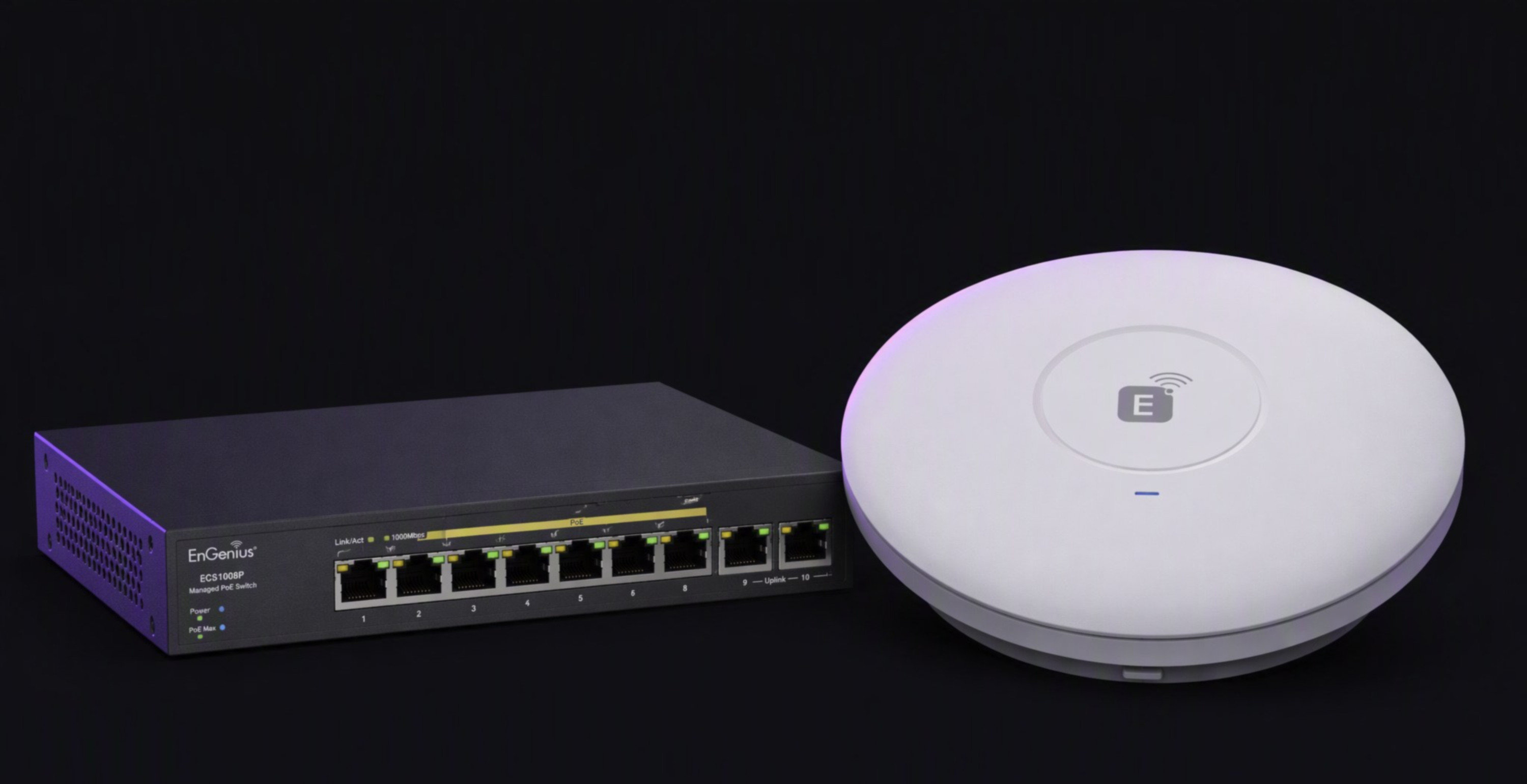
Until recently, installing a camera, an IP phone, or an access point typically required two separate installations — electrical and network. PoE (Power over Ethernet) technology eliminates that problem by delivering power over the same cable that carries the data. Here's how it works and why it simplifies AV and network installations so significantly.
How PoE Works
PoE uses unused wire pairs in a standard network cable (or, in newer variants, all four pairs at once) to deliver DC power alongside the data signal. The power-sourcing device — usually a PoE-capable network switch or a dedicated injector — detects whether the connected equipment supports the technology before applying voltage, which protects non-compliant devices from damage.
PoE Standards and Available Power
- 802.3af (PoE) — the base standard, delivering up to around 15 W per port, sufficient for IP phones or simple cameras.
- 802.3at (PoE+) — up to around 30 W, supporting devices such as PTZ cameras or access points with higher power requirements.
- 802.3bt (PoE++) — the newest standard, delivering significantly more power than its predecessors, opening up applications such as powering displays, thin clients, or certain AV equipment.
When designing an installation, a switch's total power budget matters — the combined demand of all connected devices can't exceed what the switch is able to deliver simultaneously, which needs to be accounted for when selecting the hardware.
Benefits for AV and Network Installations
PoE's biggest advantage is simplified installation — a single network cable to a ceiling-mounted access point, a camera on a building facade, or a digital signage display means no separate electrical run is needed, and no electrician has to be brought in for each mounting point. It also adds flexibility — a PoE-powered device can easily be relocated along with its network cable. On top of that, connecting a PoE switch to a UPS automatically protects every device it powers in the event of a power outage, without needing separate backup power supplies at each individual device.
Summary
PoE is one of those technologies that isn't obvious at first glance but genuinely cuts the time and cost of installing network and AV equipment. When planning an installation, though, it's worth keeping the switch's power budget in mind — that's the most common constraint that only reveals itself once an existing installation is expanded.
Read also: Wikipedia