
In short: An overview of the key trends and innovations shaping professional wireless loudspeakers.
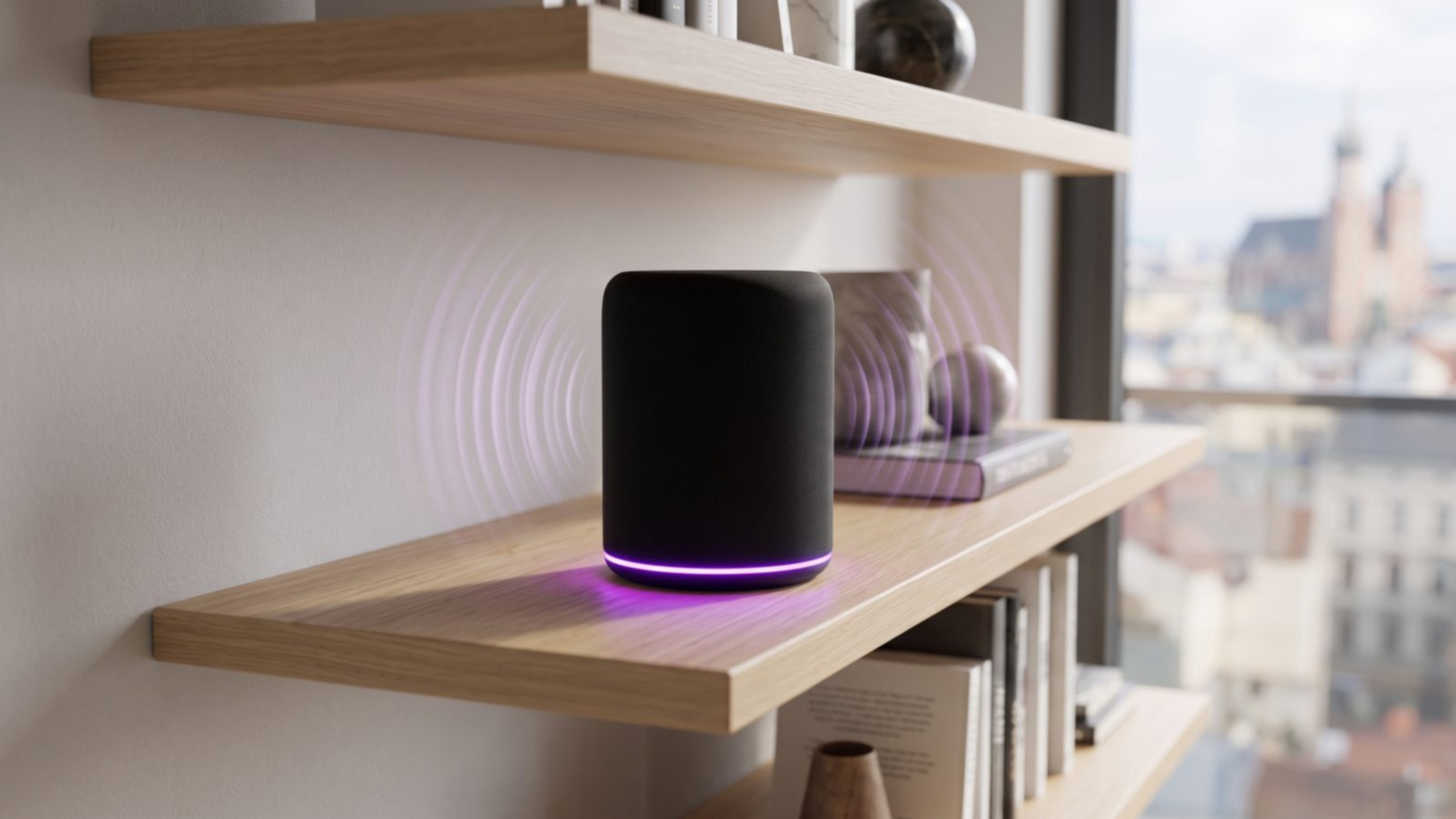
The professional wireless loudspeaker market is changing faster than it was just a few years ago — what used to be associated mainly with portable speakers for home use is increasingly finding its way into commercial installations: offices, conference rooms and event spaces. We look at the most important directions this technology is developing in, without focusing on specific models, which change quickly anyway.
Integration with audio-over-IP networks
More and more professional wireless systems can connect to audio networks based on IP audio transmission standards, previously known mainly from wired installations. This means a wireless loudspeaker is no longer an isolated endpoint, but becomes part of a larger, centrally managed audio network — with signal routing, device status monitoring and remote diagnostics available from a single place.
Lower wireless transmission latency
One of the historical limitations of wireless loudspeakers was signal delay (latency) noticeable enough to make synchronization with picture or with other loudspeakers in the system difficult. Newer radio transmission solutions are steadily reducing this problem, opening the door to using wireless loudspeakers in applications that previously required cabling — for example, multi-zone installations where precise timing synchronization is critical.
Multi-zone management from an app
Wireless systems increasingly offer centralized management from a mobile app or a cloud panel — an administrator can control volume, configuration and battery status for loudspeakers spread across many rooms or even locations, all from one place, without needing to be physically present at each device.
Automatic acoustic correction and DSP integration
More and more wireless loudspeakers have built-in functions for automatically tuning their sound to a room's acoustics, using a built-in measurement microphone and real-time correction algorithms. A process that until recently required a separate DSP and manual tuning is now increasingly automated, happening right after the loudspeaker is installed in a new location.
Power and battery life
Advances in battery technology are translating into longer run times for wireless loudspeakers between charges and shorter charging times. In commercial installations this has practical significance — fewer disruptions caused by dead equipment and greater flexibility when planning multi-hour events.
Wireless network security
As the number of loudspeakers operating on wireless networks grows, so does the importance of securing that communication against unauthorized access or interference. Manufacturers increasingly implement transmission encryption and mechanisms to isolate the audio network from the rest of the corporate network traffic, which is especially important in enterprise installations.
Rule of thumb: when planning a new installation, it's worth choosing wireless systems with integration into the rest of the network infrastructure in mind — that's the direction the whole industry is heading, not a passing trend.
Summary
Wireless loudspeakers are ceasing to be a compromise chosen only when running a cable isn't possible, and are increasingly becoming a deliberate design choice — thanks to lower latency, better integration with audio networks and more convenient management. This is a development worth watching when planning AV installations for the coming years.
Read also: SoundGuys