
In short: We explain how the two microphone types differ and where each one performs best.
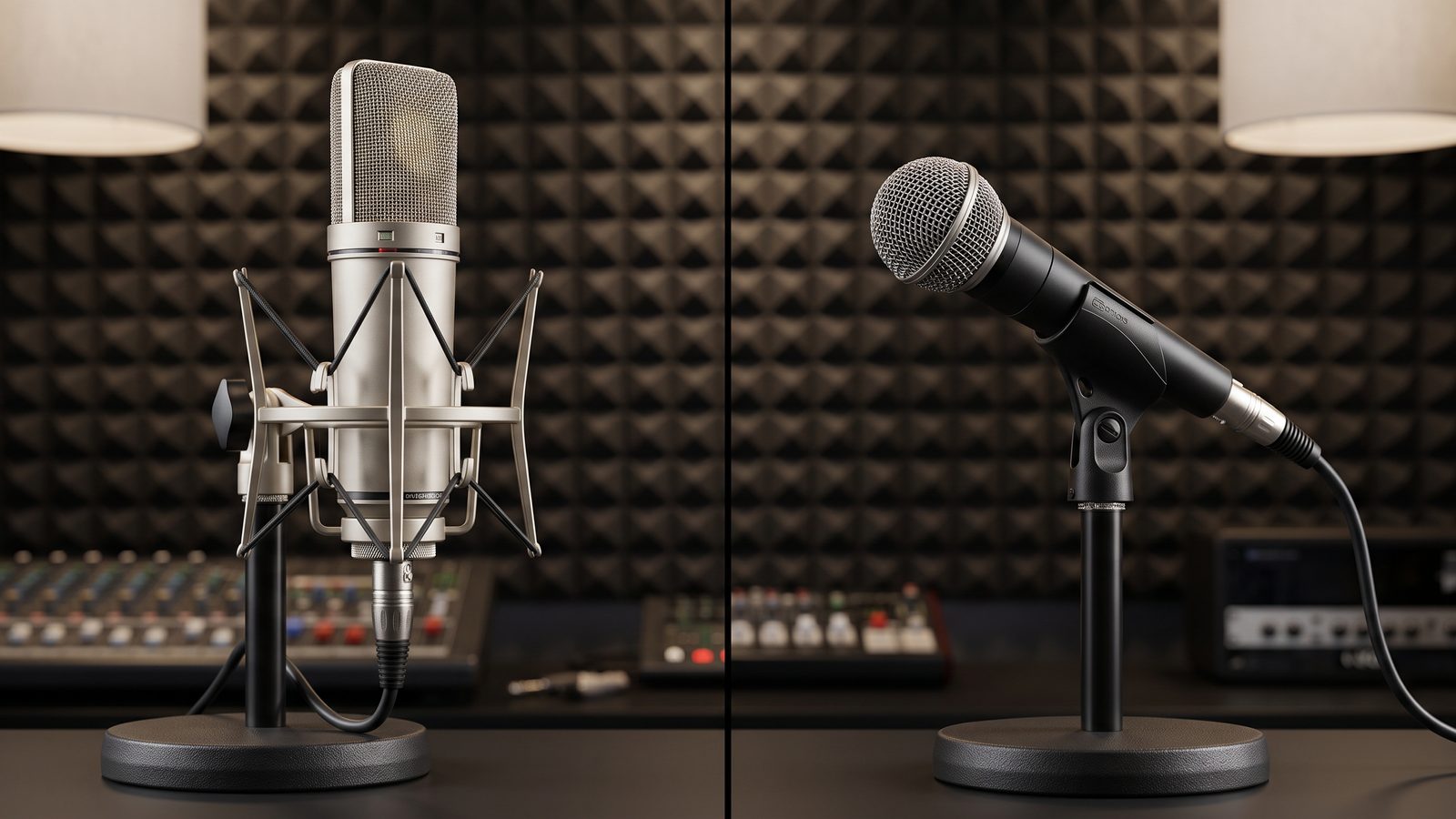
Choosing between a condenser and a dynamic microphone is one of the first decisions to make when planning sound reinforcement for a room, a recording studio, or a podcast setup. The two types differ in operating principle, tonal character and tolerance for working conditions, so picking the wrong microphone for the situation often ends in disappointment — even when the rest of the system is configured correctly. In this article we explain how they differ and where each one performs best.
Operating principle — different mechanism, different sound character
Condenser microphones
In a condenser microphone, sound moves a very thin, electrically charged diaphragm positioned close to a fixed backplate — together they form a capacitor whose capacitance changes as the diaphragm vibrates. This design delivers high sensitivity and a wide, detailed frequency response, but it requires phantom power (usually 48V) and more careful handling — the diaphragm is delicate and sensitive to moisture or strong sound pressure.
Dynamic microphones
A dynamic microphone works on the principle of electromagnetic induction — sound moves a coil suspended in a magnetic field, which directly generates an electrical signal. The construction is simpler and considerably more rugged, requires no phantom power, and a dynamic microphone is also less sensitive to sound arriving from the sides and rear, which in practice means less susceptibility to ambient noise.
Where each type performs best
- Condenser microphones — studio recordings, vocal tracks, acoustic instruments, ceiling microphones in conference rooms, and anywhere faithful reproduction of subtle sound detail matters in a controlled, quiet environment.
- Dynamic microphones — concert stages, gooseneck microphones on lecterns, live broadcasts, noisy environments, and situations where the hardware has to withstand frequent handling, changing conditions and high sound pressure levels without risk of overload.
What to consider when choosing
Beyond the basic operating principle, it is worth considering the polar pattern (cardioid, omnidirectional, supercardioid), the distance between the speaker and the diaphragm, and the acoustics of the room where the microphone will work. A condenser microphone in a reverberant room with outside noise can "catch" more unwanted sound than a less sensitive dynamic microphone — even if it has better specs on paper. How the microphone is used matters too — a speaker moving freely around the room needs a different solution than someone sitting at a fixed distance from a table microphone.
Rule of thumb: if you are unsure, choose a dynamic microphone for live use and acoustically difficult rooms, and reserve a condenser for recordings in controlled, quiet conditions.
Summary
Neither type of microphone is universally "better" — the choice depends on the application, the acoustic environment and how the microphone is used. A well-designed audio installation often combines both types, assigning each the role where it performs best, rather than looking for a single solution for every application.
Read also: SoundGuys