
In short: Before you decide to install it yourself, learn the most common pitfalls and their consequences.
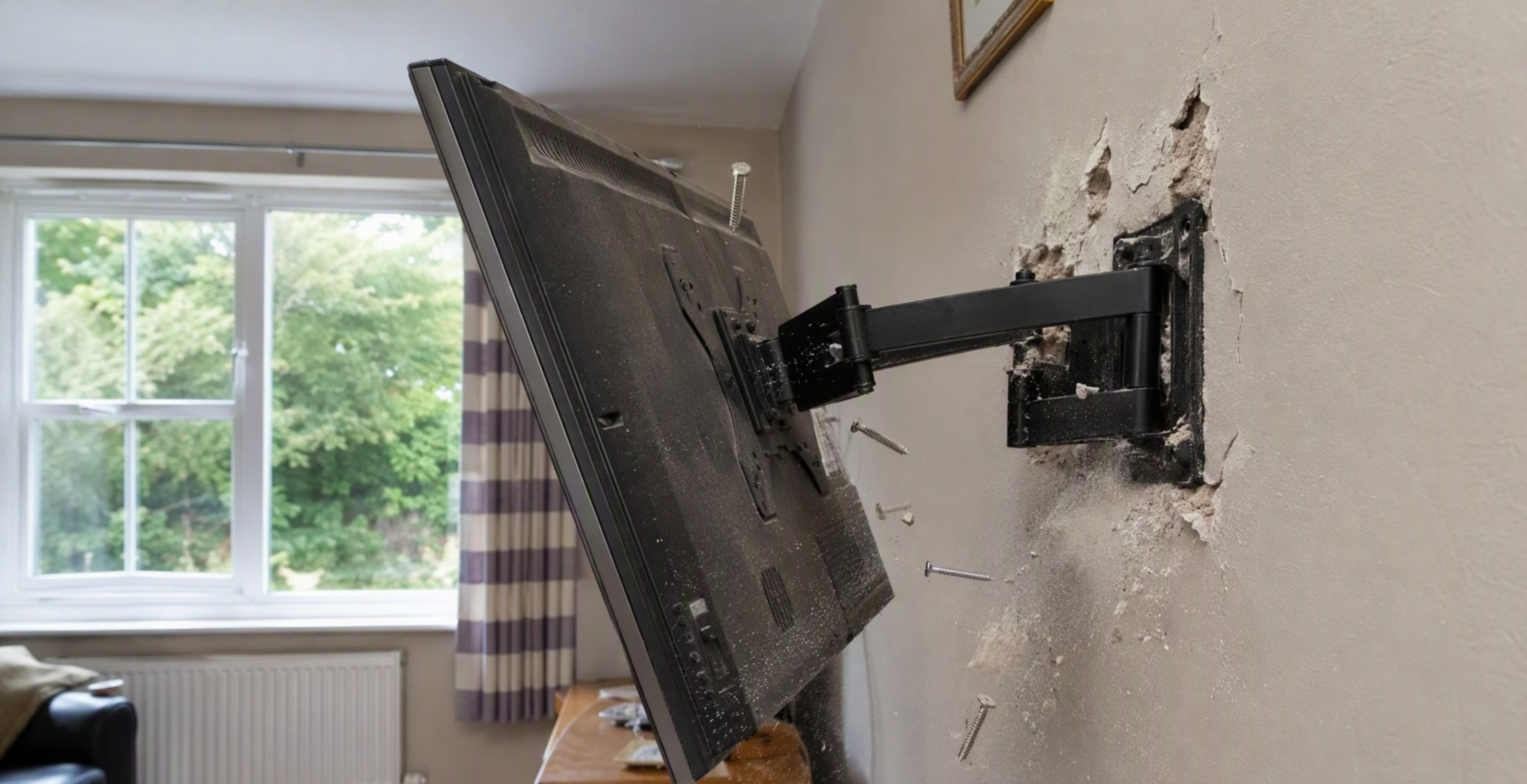
Mounting a TV or speakers "yourself" seems like a simple Saturday-afternoon job — until reality catches up, whether that's a mount starting to work loose or a tangle of cables hanging off the side of the screen. A DIY installation isn't always a mistake, but it's worth knowing the typical pitfalls before reaching for the drill. Below are the most common errors that lead to costly fixes, or in worse cases, damaged equipment and walls.
Mistakes When Mounting TVs and Wall Mounts
The most common problem is mismatching the anchors to the wall type — masonry walls call for different fasteners than drywall on a stud frame, and choosing wrong ends with the mount pulling out of the wall, chunk of drywall included, after a few months of use. A second typical mistake is ignoring the mount's rated weight capacity and hanging a TV right at the manufacturer's limit, with no safety margin. Another frequent issue is a poorly chosen mounting height — a TV hung too high because "it looks nice on the wall," rather than at a height that actually matches the real viewing position.
Mistakes in Cable Routing
- No planned cable route before installation — leads to makeshift fixes and visible cables hanging down the wall.
- Cables that are too short — bought "by eye," with no allowance for repositioning the equipment later or adding another device.
- Running signal cables close and parallel to power cables — can cause picture or audio interference, especially over longer runs.
- In-wall installation without checking what's inside the wall — risk of hitting existing electrical or plumbing lines while cutting a channel.
Mistakes in Network and Control System Configuration
In more elaborate installations — smart home setups, multiroom audio, app-based control — a common mistake is connecting devices to the home Wi-Fi network without proper planning, resulting in an unstable system once more devices are connected. Another typical problem is skipping firmware updates during initial setup, which later shows up as hard-to-diagnose "mystery" faults that actually stem from firmware version incompatibility.
Rule of thumb: before drilling into a wall, always check what's inside it, and compare the mount's rated capacity against the equipment's real weight, with a margin of at least ten to twenty percent.
When It's Worth Calling a Professional
A simple installation of a single TV on a lightweight mount in a typical masonry wall is something many people can successfully do themselves. The picture looks different with heavier equipment, in-wall mounting that requires working inside the wall, installations in multi-unit buildings (where additional requirements may apply under local building regulations or the building's bylaws), and more complex systems tying multiple devices together. In these cases, the cost of a professional installation is usually lower than the cost of fixing the consequences of a badly done DIY job.
Summary
DIY AV installation can be a good option for simple setups, but it requires awareness of the typical pitfalls — from choosing the right anchors to planning cable routes. In more complex cases, especially with heavier equipment or work inside a wall's structure, it's worth consulting a professional before starting the job.
Read also: SANUS