In short: We compare lifespan, running costs and image quality between lamp and laser projectors.
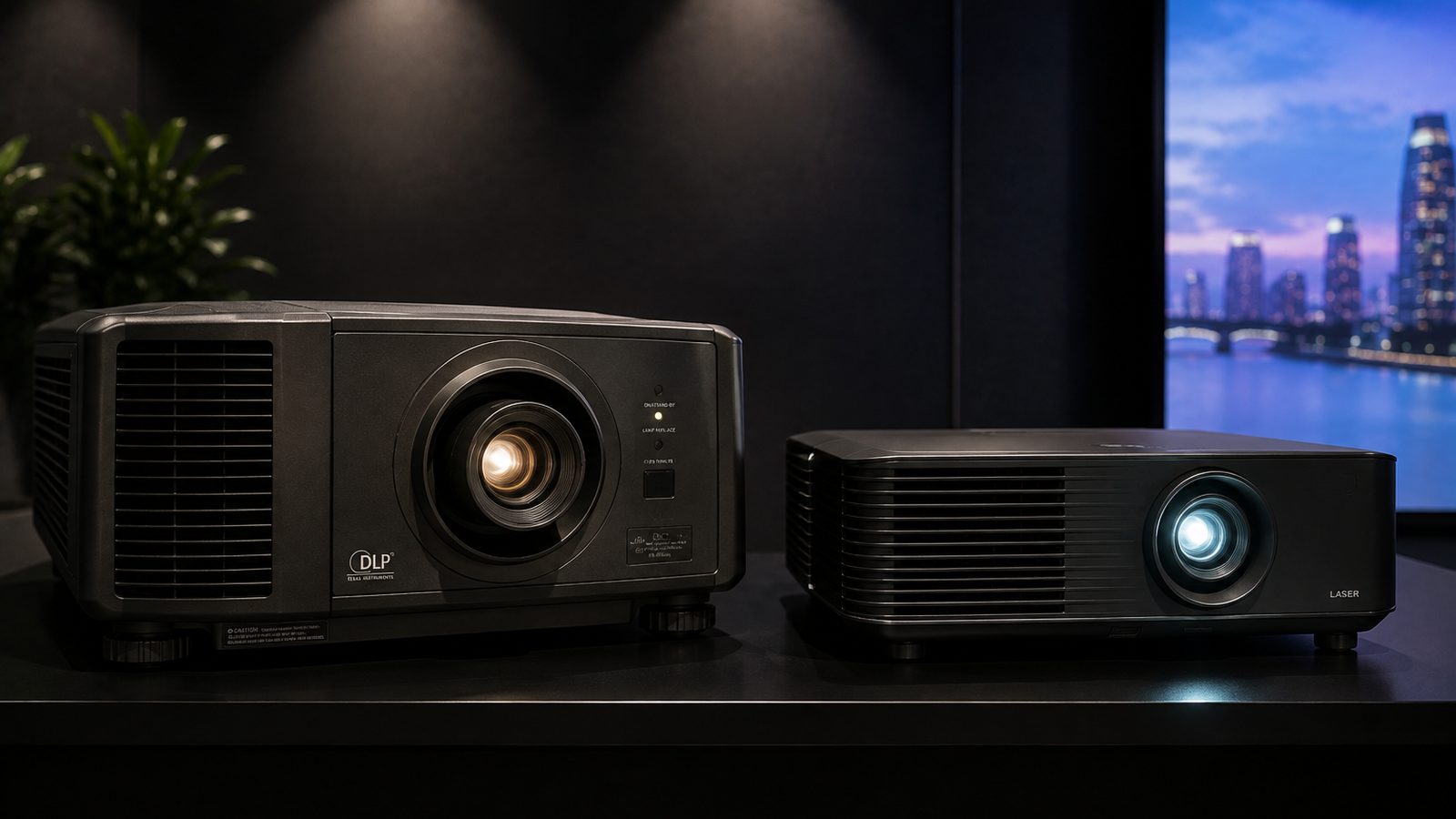
The light source is one of the most important factors determining a projector's running costs and how convenient it is to use. The classic UHP lamp was the standard for years, but more and more office and conference installations today use laser projectors. We look at how the two solutions differ and when choosing a laser genuinely pays off.
Light source lifespan
A classic projector lamp has a limited lifespan measured in thousands of hours of operation, after which it loses much of its brightness, and replacing it involves an extra cost and equipment downtime. Laser light sources have a considerably longer lifespan and a slower brightness decline over time, which translates into genuinely less frequent servicing in rooms used daily for many hours.
Running costs in practice
A laser projector usually costs more to buy, but that difference balances out over the equipment's service life — there's no need to buy replacement lamps or plan downtime for swapping them. In conference rooms where equipment tends to be switched on for most of the working day, this math usually favours the laser. In rooms used occasionally, a few times a week, the difference in total cost of ownership is much less pronounced, and the pricier purchase may not pay for itself as quickly.
Rule of thumb: the more often and the longer a room is used, the stronger the case for a laser projector — in rarely used rooms, the running-cost difference between a lamp and a laser can be negligible.
Image quality and stability
Laser projectors typically offer more stable brightness from the moment they're switched on — they don't need a warm-up period to reach full output, as lamp-based units often do. In addition, some laser models allow mounting in any orientation, including at an angle or upside down, without the restrictions classic lamps had in such positions. This can matter for rooms with unusual geometry or stage installations.
Service, noise and maintenance
Laser sources generally generate less heat than lamps, which translates into quieter cooling fans — important in small rooms, where equipment noise is clearly audible during conversation. It's worth remembering, though, that a laser projector still needs periodic maintenance, including cleaning the air filters — no lamp to replace doesn't mean no servicing at all.
Summary
Choosing between a lamp and a laser is, in practice, a decision about the investment's time horizon and how intensively the room is used. A laser projector makes sense wherever equipment runs regularly and for long hours, and lower running costs plus fewer disruptions will quickly offset the higher purchase price. In occasionally used rooms, a classic lamp projector remains a sensible, cheaper choice.
Read also: ProjectorCentral