In short: An underpowered or oversized amplifier is a common design mistake — we show how to calculate power correctly.
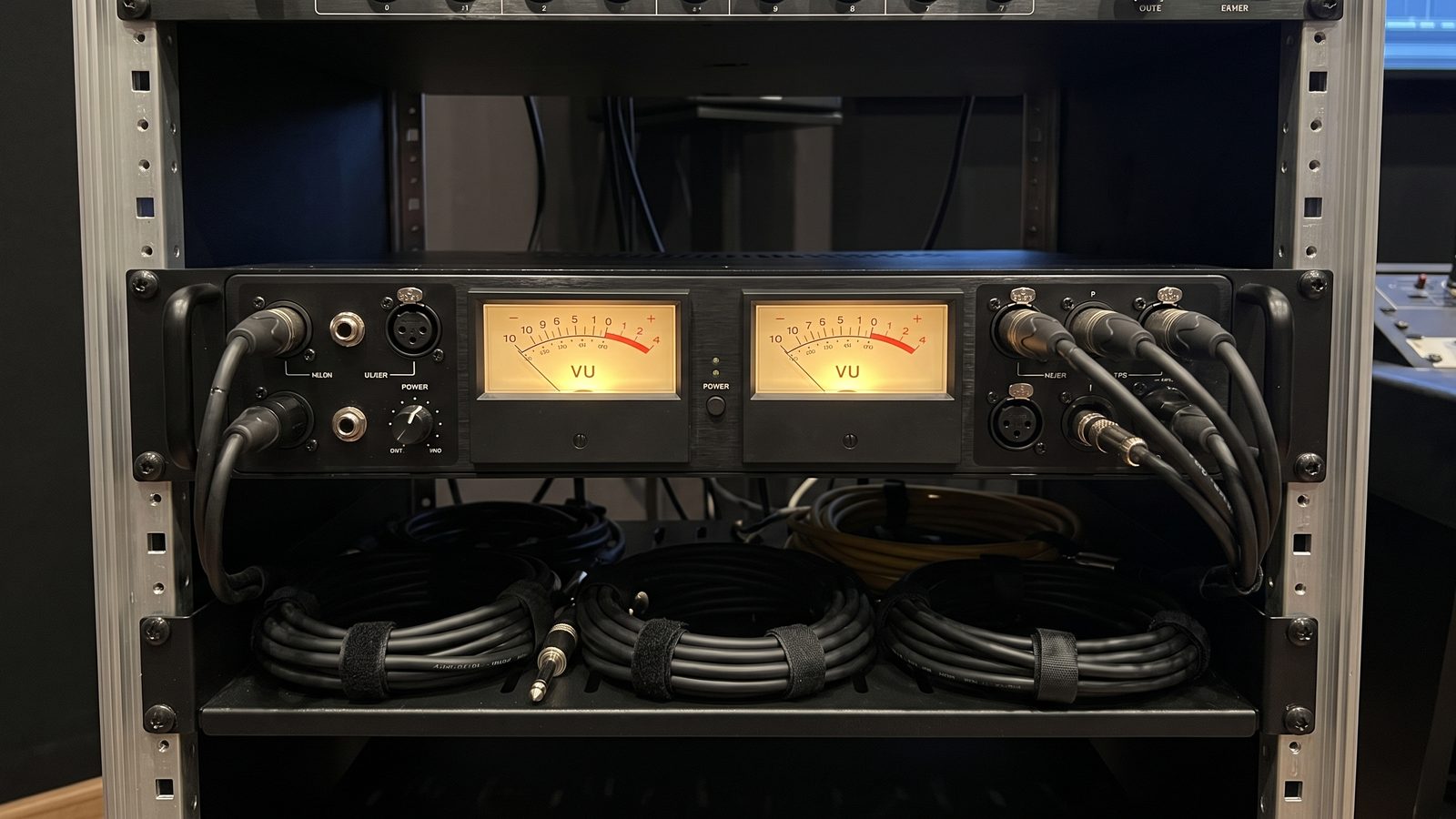
Choosing amplifier power is one of those parts of a sound reinforcement design that's easy to underestimate — and the consequences of getting it wrong only show up in practice, as clipped, distorted sound or damaged loudspeakers. Both an underpowered and a poorly matched amplifier can ruin the results of even very good loudspeakers. We explain how to approach this in practice.
Basic concepts you need to know
Before choosing an amplifier, it helps to understand a few terms describing a loudspeaker. RMS (continuous) power is the power a loudspeaker can handle during continuous operation, while peak power describes the short-term maximum it can handle without damage. Equally important is a loudspeaker's impedance, expressed in ohms — the amplifier must be matched to work within the impedance range it was designed for.
Why an underpowered amplifier is risky
Intuition suggests a weaker amplifier is safer for loudspeakers — in practice it's often the opposite. When an underpowered amplifier operates at the limit of its capability, the signal undergoes clipping — distorted in this way, the sound contains a lot of high-frequency energy, which can damage tweeters far faster than running a suitably more powerful amplifier with headroom to spare.
Headroom, or power reserve
Good design practice is to give the amplifier some power reserve above the loudspeaker's rated power — so-called headroom. This means the amplifier doesn't constantly operate at the edge of its capability, reducing the risk of clipping during sudden, dynamic passages of sound (for example drum hits or louder speech passages). In professional installations, this power reserve is further backed up by the limiter in the DSP, which prevents the signal from exceeding a safe level.
Low-impedance installations vs 100V systems
In larger installations, especially where many loudspeakers are distributed over a large area (for example in an office or a shop), a 100V transformer system (also known as a constant-voltage line) is often used instead of a classic low-impedance connection. It allows long cable runs with minimal power loss, and lets many loudspeakers connect to a single amplifier, with the power drawn by each one individually set via a transformer. A classic low-impedance connection, on the other hand, works well where the number of loudspeakers is small and the distances from the amplifier are short.
Rule of thumb: when choosing an amplifier, aim for power somewhat higher than the loudspeaker's rated power rather than exactly equal to it — a power reserve combined with a limiter protects equipment more effectively than an amplifier running at the edge of its capability.
Summary
Choosing amplifier power isn't just about matching a wattage number to a loudspeaker's spec sheet — it also means accounting for the installation topology, power headroom and how the system is protected against overload. In practice, it's safest to leave these calculations to an AV installation designer who will factor in the specifics of the room and how the system will be used.
Read also: ProSoundWeb