
In short: Spatial audio transforms how you experience films — we look at what's needed to bring Atmos home.
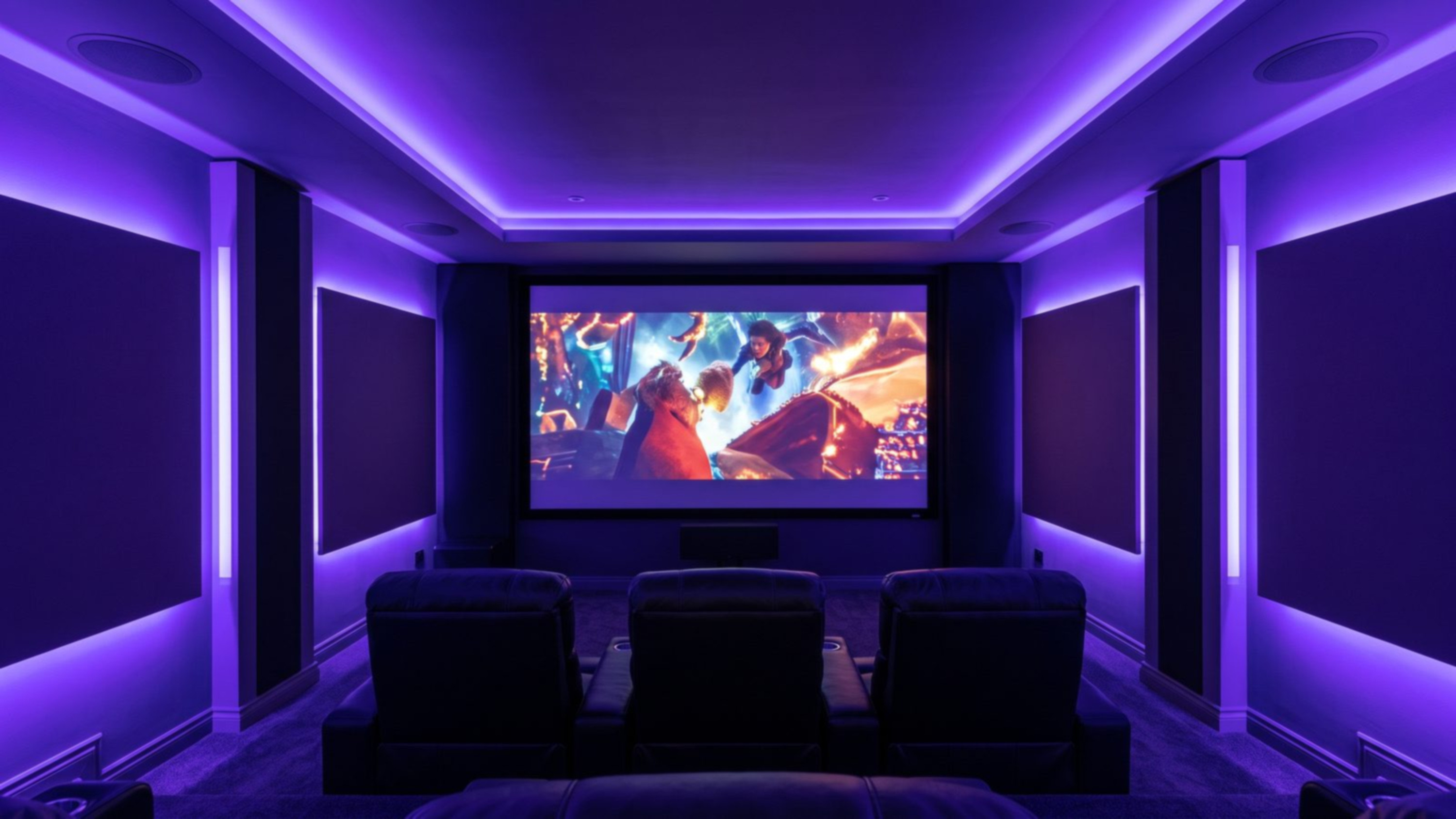
A classic 5.1 or 7.1 surround system has long been the standard for home theatres, but object-based audio, like Dolby Atmos, adds something a flat channel layout simply can't offer — a genuine sense that sound moves above the viewer's head as well. We look at what makes the difference and what you actually need to set up Atmos at home.
How Dolby Atmos differs from classic surround
In traditional multichannel systems (5.1, 7.1), sound is permanently assigned to specific channels and loudspeakers — the sound mixer decides what plays from the left, right or rear speaker. Dolby Atmos works differently: it treats individual sounds as objects placed in three-dimensional space, and the audio system decides during playback which loudspeakers (including overhead ones) reproduce a given sound, so the spatial impression is as realistic as possible. That's what makes it possible to reproduce, for example, an aircraft flying overhead or rain falling from above.
What's needed to set up Atmos at home
An AV receiver or processor with Atmos support
The foundation is an AV receiver or processor capable of decoding Dolby Atmos soundtracks and splitting the signal to the overhead channels.
Height channels
An overhead sound impression can be achieved two ways: mounting dedicated speakers in the ceiling above the listening position, or using speakers with upward-firing modules that bounce sound off the ceiling, placed on top of floor-standing speakers or as separate modules. A ceiling solution usually gives a more precise, predictable spatial impression, but requires modifying the room's structure — upward-firing modules are simpler to install, but their effectiveness depends heavily on ceiling height and material.
Speaker configuration
Typical home layouts are labelled, for example, 5.1.2 or 7.1.4 — the first number is the speakers at listener level, the second is the subwoofer(s), and the third is the number of height channels. The more height channels, the more precise the overhead sound positioning, though the difference between a simpler and a more elaborate configuration is mainly noticeable in larger rooms.
Is Atmos worth it
The Dolby Atmos effect is most noticeable with content actually mixed in that format — not every film or series offers such a soundtrack. It's also worth remembering that in a small room, or with ceilings of an unusual shape (sloped ceilings, beams, great height), the spatial effect can be harder to achieve than in a standard rectangular room with a flat ceiling.
Rule of thumb: before investing in height speakers, check the acoustics and shape of the room's ceiling — they largely determine whether the Atmos spatial effect will be fully perceptible.
Summary
Dolby Atmos can genuinely transform how films and series come across, but it's a solution that requires thoughtful loudspeaker choices and consideration of the room's specifics — not simply a matter of buying an extra AV receiver. A well-planned installation accounts for this from the start, rather than adding speakers by trial and error.
Read also: Dolby Atmos