
In short: Even the best equipment can't save a poorly sounding room — we explain the role of interior acoustics.
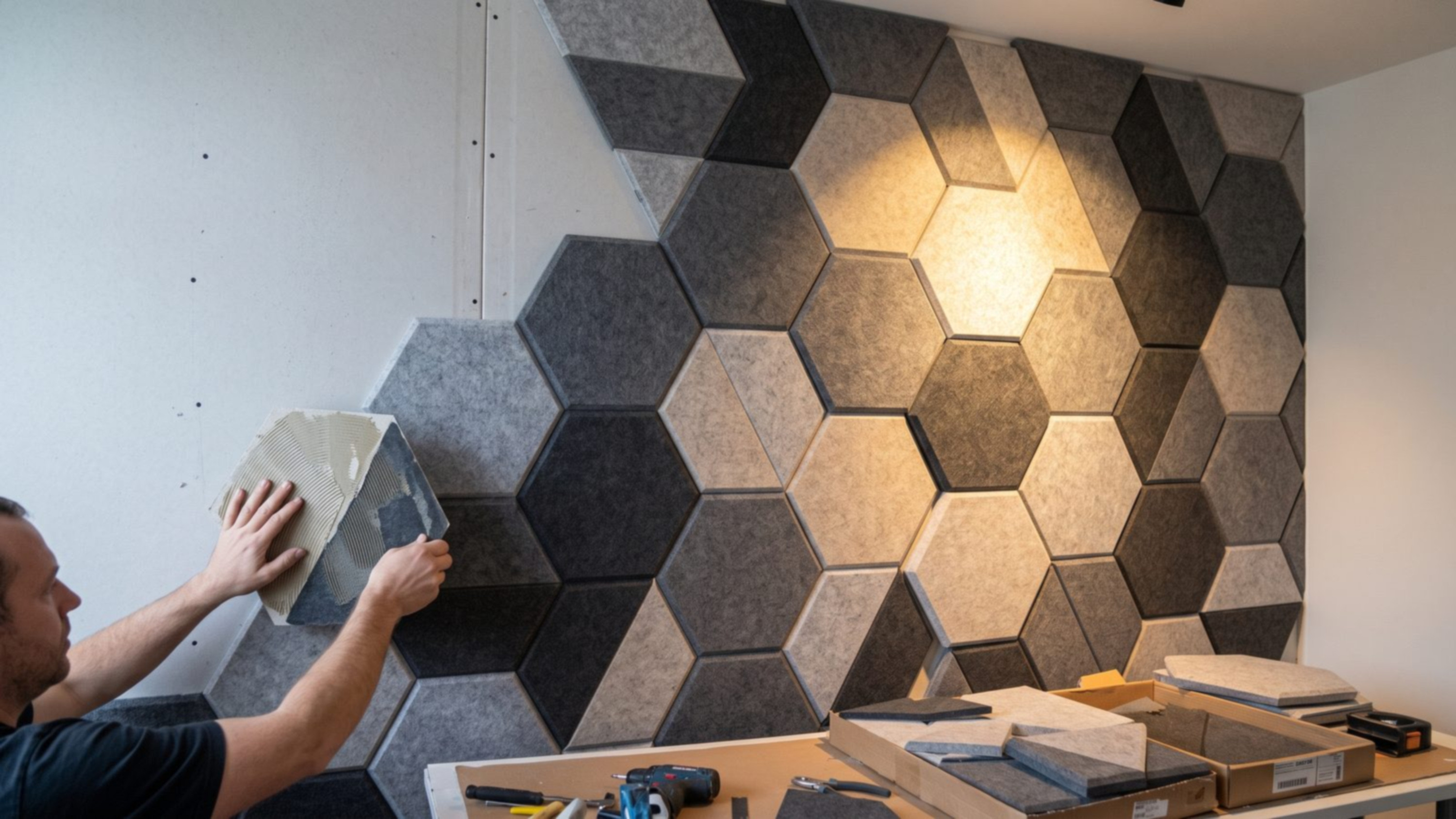
You can invest in the best loudspeakers and microphones on the market, and the sound in the room can still come out muddy, unclear or "metallic." The culprit is usually not the equipment, but the acoustics of the room itself — the way sound waves reflect off the walls, ceiling and floor. Acoustic panels are the simplest and most effective way to actually solve this problem, rather than just masking it with louder sound reinforcement.
Why room acoustics matter
Every room has its own natural reverberation time — how long it takes sound to decay after the source stops. In rooms with plenty of hard, parallel surfaces (glass, concrete, smooth plasterboard) reverberation is long, and successive sounds overlap before the previous ones have finished decaying. The result is degraded speech intelligibility — meeting participants physically hear a voice but struggle to make out individual words, especially during transmission to remote participants, where the microphone further amplifies the reverberation effect.
Types of acoustic panels and their applications
- Absorption panels — the most common solution, they absorb the energy of sound waves (mainly mid and high frequencies), shortening reverberation and reducing echo.
- Bass traps — usually mounted in room corners, where low frequencies (harder to control with standard panels) tend to build up.
- Diffusers — instead of absorbing sound, they scatter it in many directions, preserving a room's natural "liveliness" without over-deadening it — often used in concert halls and studios.
Where to mount panels for the best effect
How effective panels are depends largely on where they are mounted, not just how many there are. The most important spots are the so-called first-reflection points — locations on side walls and the ceiling where sound from the speakers bounces directly toward the listener before the direct wave arrives. Treating precisely these points, rather than hanging panels randomly around the room, gives the most noticeable improvement using a relatively small area of acoustic material.
It is also worth remembering the back wall of the room, especially in elongated spaces — that is often where reflected energy accumulates, producing the characteristic "echo" heard especially during speech reinforcement.
Rule of thumb: before investing in more expensive sound reinforcement equipment, check the room's acoustics — sometimes a few well-placed panels improve sound quality more than replacing the loudspeakers.
Summary
Room acoustics and AV equipment are two parts of the same system — neither works fully without the other. Acoustic panels matched to the character of the room and mounted at the key points can transform how a space sounds without touching the sound reinforcement installation itself.
Read also: GIK Acoustics